Word City: Connect Word Game
- 4.8
- Rating
- 5.00M
- Installs
- Free
- Price
 Analysis by App-foxy
I enjoy word games that are easy to start but still give me a reason to return, and Word City: Connect Word Game fits that space well. It is a free word puzzle from Unico Games Studio built around linking letters to complete crossword-style challenges. The idea is familiar, but the appeal comes from how little preparation it requires: I can open it for a short break, solve a few clues, and stop without feeling that I have committed to a long session.
My overall view is positive, with one important qualification. This is best understood as a relaxed vocabulary game rather than a deep competitive word experience. It rewards patience, pattern recognition, and a willingness to try combinations, but it is not the right pick if you want a strict dictionary challenge, a fast multiplayer match, or a large amount of strategic variety. For casual solo play, though, it offers a comfortable balance between accessibility and mental effort.
How the letter-linking format feels in everyday play
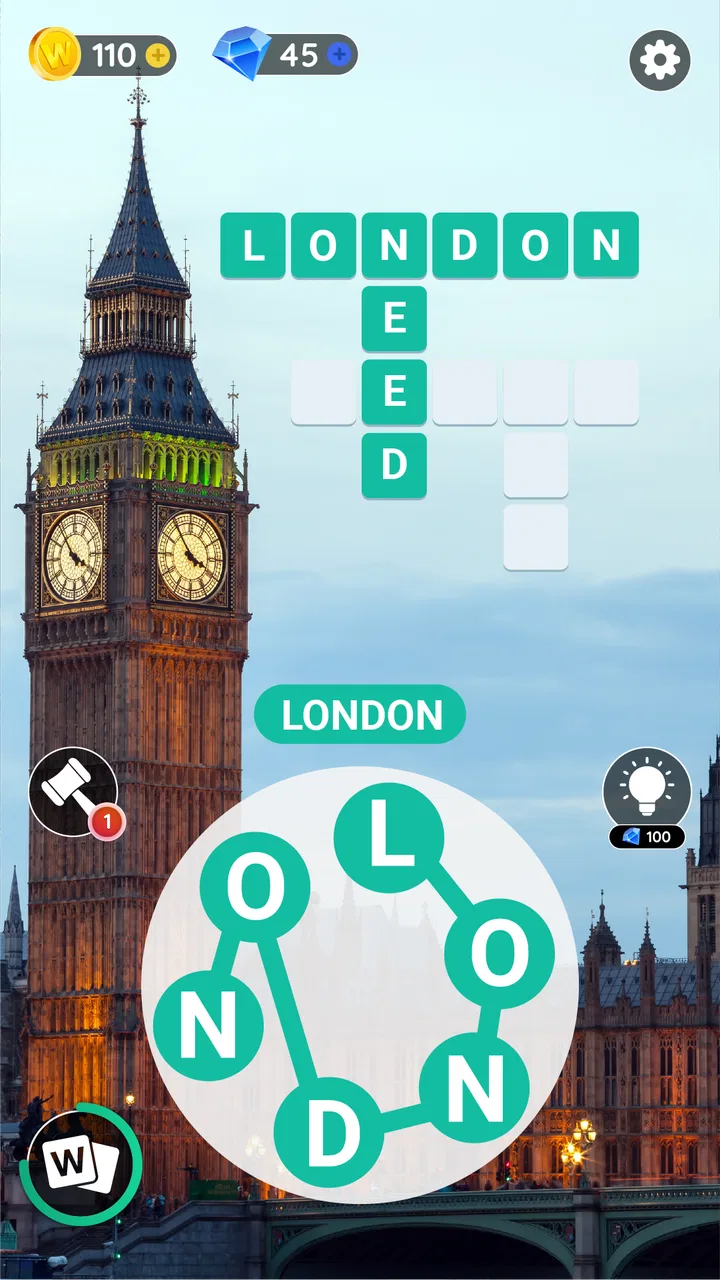
The central loop is straightforward. Letters are presented for you to connect, and the words you find help complete a crossword-like arrangement. That combination gives the game two small goals at once: I am not only looking for any possible word, but also trying to understand where that word belongs in the puzzle. The result feels more directed than a basic word-search grid while remaining less demanding than a traditional crossword with long written clues.
You May Also Like

 Blood Strike: 2.5 Anniversary
Blood Strike’s Loadouts Turn Every Drop Into a Tactical Gamble
A close look at Blood Strike’s custom loadouts: how fast access to signature weapons reshapes its battle royale rhythm, rewards preparation, and narrows the gap between fights.

 Pandora - Music & Podcasts
Pandora’s Music Is Easy to Start, but Harder to Recover
Pandora’s strength is its low-effort path from a seed to a station. Its weak spot is how much confidence it asks you to place in connection, setup, and quiet recovery.

 8 Ball Pool
 Is Built on Rivalries, Rematches, and Routine
A close look at the rivalries, rematches, shared routines, and unanswered safety questions that turn a quick pool match into a persistent mobile community.

 Samsung Music
’s Quiet Strength Is Playing What You Already Own
Its reach comes less from spectacle than from dependable access to a personal library. That simplicity is both the app’s strongest retention engine and its ceiling.

 AccuWeather: Weather Radar
AccuWeather Review: A Quick, Clear Forecast for Everyday Decisions
For everyday plans, the best forecast is the one you can understand quickly. AccuWeather makes rain timing, radar, and local conditions easy to act on, with a few trade-offs.

 Hill Climb Racing
Why Hill Climb Racing Still Turns Crashes Into One More Run
A tiny car, a bumpy hill and one more upgrade: Hill Climb Racing keeps resurfacing because its simple chaos makes every near-miss feel personal.
More From Our News Desk



That distinction matters when choosing a game for a particular mood. A classic crossword usually asks me to interpret clues, recall facts, and work through a fixed structure. A pure anagram game focuses more narrowly on rearranging letters. Word City sits between those approaches. I still get the satisfaction of discovering words, but the connected layout gives each answer a visible purpose. When one solution opens up a nearby part of the board, the progress feels more tangible than simply watching a list of found words grow.
I find this format especially suitable for short, interrupted sessions. If I am waiting for an appointment or taking a break from work, I do not need to remember a complicated storyline or rebuild a strategy from the beginning. The game’s word-focused structure makes it easy to return after a pause. That simplicity is one of its strongest practical advantages, even though players looking for constant novelty may eventually find the basic loop repetitive.
The game is listed for everyone, which matches its approachable presentation and gentle learning curve. A child who already enjoys forming words can understand the basic action quickly, while an adult can use it as a quiet way to keep the mind occupied. I would still treat the age label as a broad guide rather than a promise that every puzzle will suit every reading level. Vocabulary familiarity naturally varies, and some answers may feel obvious to one player but unfamiliar to another.
Why the crossword connection improves the experience
The most effective part of the design is the relationship between a word and its position. In a loose word hunt, finding an answer can feel like checking an item off a list. Here, the surrounding letters and open spaces provide context. When I am unsure of a word, the shape of the unfinished section can narrow my choices. Conversely, finding one answer can reveal a useful letter arrangement for another.
This creates a practical solving method that is more reliable than guessing randomly. I usually begin with the most obvious short combinations, then look at the partially completed lines rather than staring at the entire letter group. If progress stops, I change direction and search for a different length or a word that crosses an existing answer. That habit reduces frustration and makes the game feel like a process of elimination instead of a test of instant inspiration.
There is also a nice rhythm between confidence and uncertainty. Familiar words give quick momentum, while less obvious combinations slow me down enough to make the eventual discovery satisfying. I do not need specialist knowledge to participate, which is important for a casual game, but I still have to pay attention to spelling and arrangement. The format gives ordinary vocabulary a small puzzle structure without turning every round into a serious examination.
One useful tip is to avoid spending too long on the first word that comes to mind. A plausible answer may fit one part of the board while leaving an awkward arrangement elsewhere. I get better results by checking how each candidate interacts with the remaining spaces before committing mentally to it. This is a small adjustment, but it makes the game feel less like trial and error and more like solving a compact logic problem.
What the large player response suggests—and what it does not
The game has reached over five million installs, and its average rating is 4.8 from around 203 thousand ratings. Those figures indicate that the basic concept connects with a substantial audience, especially people who want a familiar word pastime rather than an elaborate game system. I see that popularity as evidence of accessibility, not proof that every player will enjoy the long-term progression.
That distinction is important because word games are highly personal. Some players want calm repetition, while others need new mechanics, timed events, head-to-head competition, or increasingly unusual vocabulary. A strong reception can tell me that the core loop works for many people, but it cannot remove the question of whether that loop matches my own preferences. In my experience, the decision should come down to how much I value simplicity and how tolerant I am of repetition.
The developer, Unico Games Studio, has kept the identity of the game focused on connecting letters and solving crossword-style layouts. I appreciate that clarity. There is no need to learn a complicated control scheme before reaching the actual puzzle. The current version is 4.2.38, and the game supports devices running Android 7.1 or later, so it remains accessible to many older Android phones and tablets as well as newer devices.
Where it works best in a normal day
My favorite use case is a ten-minute pause when I want something more engaging than scrolling but less demanding than a full game. I can begin with the available letters, solve the most recognizable words, and use the resulting crossings to guide the harder choices. If I have to put the phone down, the puzzle format is easier to resume than an action game where timing and momentum matter.
It can also suit someone who wants a low-pressure vocabulary habit. I would not describe it as a formal learning tool, and I would not use it as a replacement for reading or structured language study. Still, repeatedly examining letter combinations encourages attention to spelling and word patterns. For someone learning English, the benefit will depend on how familiar the vocabulary is and whether they are willing to look up unfamiliar answers rather than simply bypassing them.
Another useful situation is shared play without a second-player mode. I can hand the phone to a friend or family member when I am stuck, and the puzzle is understandable enough for someone else to contribute immediately. That makes it more social than its solo design might suggest. The trade-off is that the game does not appear aimed at organized competition, so people seeking rankings or direct challenges will probably prefer a different word-game category.
The limits that affect its long-term appeal
The main weakness is not the controls or the central idea; it is the possibility of routine. Once I understand the letter-connection pattern, the experience depends heavily on whether I enjoy solving one similar layout after another. The crossword framing adds structure, but it does not automatically create deep strategic variety. Players who need a strong sense of progression or a constantly changing challenge may feel that the game becomes predictable.
This is where I would choose a traditional crossword instead if I wanted richer clue interpretation. A crossword can test general knowledge, wordplay, cultural references, and deduction in ways that go beyond arranging letters. I would choose a competitive word game instead if my priority were speed, pressure, or measuring my performance against other people. Word City is calmer and more forgiving, but that calmness can also make it feel less exciting.
The free-to-play model deserves a realistic mention. The game is free to download and play, while optional in-app purchases range from $0.99 to $49.99 per item. That wide range means I would pay attention to how often I am tempted to buy help or extras during difficult moments. For a casual player who is comfortable progressing slowly, the free entry point is attractive. For someone who dislikes any purchase prompts or wants a completely fixed-cost experience, this may be a source of friction.
My advice is to decide in advance how you want to handle assistance. If I treat hints or other optional purchases as an occasional convenience rather than part of the normal solving process, the game remains a simple pastime. If I feel pressured to spend whenever a puzzle becomes difficult, the relaxed appeal disappears. This is not a criticism of the letter puzzles themselves, but it is an important part of judging whether the free model suits my habits.
Another limitation is that the game’s accessibility can work against it for experienced word players. Because the entry point is so clear, a seasoned crossword fan may find the early experience too gentle. That does not make it poorly designed; it means the intended pleasure is likely steady solving rather than intellectual intensity. I would recommend it to someone who wants approachable challenge before recommending it to a player who regularly seeks obscure clues and difficult wordplay.
Small solving habits that make a difference
I get more from the game when I separate searching from guessing. First, I scan for common short words and familiar endings. Then I use the partially completed crossword pattern to test longer possibilities. This prevents me from repeatedly reshuffling the same letters without learning anything from the board. It is a simple workflow, but it turns a stalled round into a sequence of manageable decisions.
I also try not to judge a puzzle by its opening seconds. Some boards look easy because they contain obvious combinations, yet the final spaces require a different reading of the available letters. Instead of assuming that the first visible answer defines the whole solution, I keep the remaining openings in view. The connected layout is most useful when I let it correct my initial assumptions.
When I am playing with someone else, I find it helpful to explain the shape of the missing word rather than announcing every letter I see. That keeps the other person involved and makes the session feel collaborative. It also reveals why the crossword arrangement matters: the board provides clues through position, not only through the letter bank.
These habits highlight a trade-off in the design. The game is easy to understand, but solving efficiently still benefits from method. It does not require advanced knowledge, yet it rewards players who pay attention to crossings, word length, and the consequences of each answer. That middle ground is a genuine strength for casual users who want a little more substance than a random word generator.
Who should install it, and who should pass
I would recommend it to players who enjoy solo puzzles, like forming words, and want a game that can be played in short bursts. It is particularly well suited to people who find full crosswords intimidating but still want the satisfaction of filling a connected grid. Families may also appreciate the simple premise, provided everyone is comfortable with the vocabulary used in a given puzzle.
It is a reasonable choice for an older Android device as well, since the minimum operating system is Android 7.1. That does not tell me how every individual phone will perform, but it does make the game a practical candidate for users who are not replacing hardware frequently. The free price also lowers the barrier to trying it, although I would keep the optional purchase range in mind before handing the device to a child.
I would skip it if I want multiplayer competition, a tightly structured language course, or a game built around constant mechanical surprises. I would also look elsewhere if I become frustrated by repeated letter puzzles or dislike optional purchases in free games. A dedicated crossword app is likely better for clue depth, while a competitive word title is better for urgency and social comparison.
For someone unsure whether the game will hold attention, I suggest treating the first sessions as a test of the loop rather than expecting a dramatic progression system. Ask yourself whether connecting letters into a crossword shape feels satisfying on its own. If the answer is yes, the simple structure is likely to remain enjoyable. If the answer is no, additional puzzles will not fundamentally change the type of experience.
My final recommendation
Word City: Connect Word Game succeeds because it understands the value of a clear, low-pressure word puzzle. The letter-linking mechanic is immediately readable, and the crossword layout gives each discovery a reason to matter. I like that it can fill a short break without demanding constant concentration, while still offering enough structure for thoughtful solving.
Its weaknesses are equally clear. The format may become repetitive for players who need deep clue work or competitive energy, and the optional purchase system means I would approach the free model with some self-control. Those are meaningful considerations, not minor footnotes, but they do not undermine the game’s main purpose.
With over five million installs, a 4.8 average, and a free entry point, it is easy to see why this word game has attracted a broad audience. I would recommend it to a friend who wants approachable solo puzzles, especially for waiting rooms, commutes, or quiet evening breaks. Choose it for relaxed letter solving and connected crossword progress, not for intense competition or endless strategic depth. That is the clearest way to enjoy what Unico Games Studio has made.
FAQs for Word City: Connect Word Game
01What is Word City: Connect Word Game?
Word City: Connect Word Game is a word puzzle game where players connect letters to form words. It's designed to enhance vocabulary and cognitive skills through numerous levels set in various city-themed backgrounds. The game offers a relaxing yet challenging experience for players who enjoy word games.
02Is Word City: Connect Word Game free to play?
Yes, Word City: Connect Word Game is free to download and play. It offers in-app purchases for players who wish to enhance their gaming experience with additional features or to remove ads. Players can enjoy the core game without spending money, although purchases can provide some conveniences.
03Are there any ads in Word City: Connect Word Game?
As a free-to-play game, Word City: Connect Word Game includes ads. These ads help support the developers and keep the game free. Players can opt for in-app purchases to remove ads if they prefer an uninterrupted gaming experience. Ad frequency may vary depending on gameplay time.
04What platforms is Word City: Connect Word Game available on?
Word City: Connect Word Game is available on both Android and iOS platforms. This allows a wide range of smartphone and tablet users to enjoy the game. Check the Google Play Store or Apple App Store for compatibility with your device and to download the game.
05Does Word City: Connect Word Game require an internet connection?
Word City: Connect Word Game can be played offline, making it convenient for users who may not always have internet access. However, certain features, such as syncing progress and accessing updated content, may require an internet connection. Playing offline is perfect for on-the-go gaming.
Pros
- Engaging gameplay with increasing difficulty.
- Encourages vocabulary expansion and learning.
- Offline mode available for on-the-go play.
- Free daily bonuses and rewards.
- Colorful graphics enhance the experience.
Cons
- In-app purchases can be pricey.
- Repetitive ads may disrupt gameplay.
- Limited hints can stall progress.
- Some levels feel overly easy.
- Occasional bugs cause minor glitches.

Word City: Connect Word Game
Gallery